
Why Sweeps Don’t Work
(And Never Will)
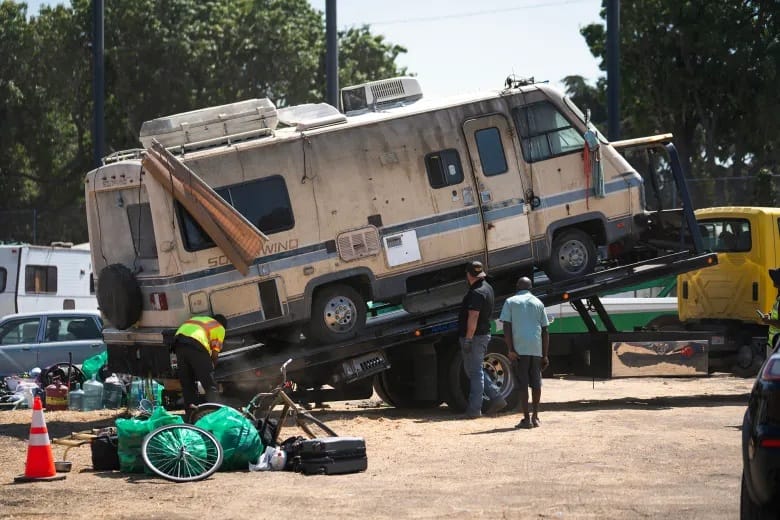
Across the country, cities keep turning to the same tool when the public gets upset about homelessness: encampment sweeps.
They move people. They clear tents. They remove belongings. They generate headlines. They create the illusion of action.
But they do not solve homelessness. They never have. They never will.
What Sweeps Really Do
Sweeps are often justified as “cleanups,” “abatements,” or “public safety operations.” In practice, they do something very different:
- Destroy stability
- Destroy continuity
- Destroy community
- Destroy belongings
- Destroy trust
- Destroy safety
- Destroy progress
People lose IDs, medications, documents, photos, survival gear, and the few possessions that make life bearable. Whatever fragile stability they had it was erased in a morning.
Why Cities Use Sweeps Anyway
Cities use sweeps because they are fast, visible, and easy to explain. They make it look like something is being done. They respond to complaints. They calm political pressure. They control the narrative.
But they do not reduce homelessness. They just move it.
Why the Old “Solutions” Are Outdated
For years, the standard response to sweeps has been:
- “Stop criminalizing homelessness.”
- “Invest in more housing.”
- “Provide more services.”
- “Use more humane approaches.”
These are important demands. But they are not enough.
They assume the only missing piece is more of the same: more beds, more outreach, more services. They do not address the deeper problem:
The system itself is not built to stabilize encampments or manage emotional and sensory fields over time.
The Real Problem: Missing Infrastructure
Housing alone doesn’t stabilize encampments. Outreach alone doesn’t stabilize encampments. Services alone don’t stabilize encampments. Stopping sweeps doesn’t stabilize encampments.
What’s missing is infrastructure:
- Encampment stabilization
- Emotional-field management
- Sensory-field management
- Continuity-based support
- Predictive behavioral systems
- Citywide emotional-climate governance
Most cities don’t even have language for this, let alone systems.
The Modern Alternative:
Stability, Continuity, Prediction
The real solution is not “sweeps vs. no sweeps.” It’s a different equation entirely:
Stability + Continuity + Predictive Systems = A City That Doesn’t Need Sweeps
When encampments are stabilized, emotional and sensory fields are managed, and continuity is protected, the conditions that lead to sweeps start to disappear:
- Fewer crises
- Less visible chaos
- Less public panic
- Less pressure on enforcement
- More trust between residents and helpers
- More predictable pathways into housing and services
This is the paradigm shift Shelter Outline represents.
What This Means for Stockton
Stockton doesn’t have to choose between “sweeps forever” and “doing nothing.” It can build something new:
- A stability system that calms encampments instead of destroying them
- A continuity engine that protects progress instead of resetting it
- A predictive operating system that anticipates needs instead of reacting to crises
When that infrastructure is in place, sweeps stop being “necessary.” They start looking like what they have always been: a symptom of a system that never had the right tools.