
Story 3: Headlines vs. Reality
The Public Perception Series · Shelter Outline Stories
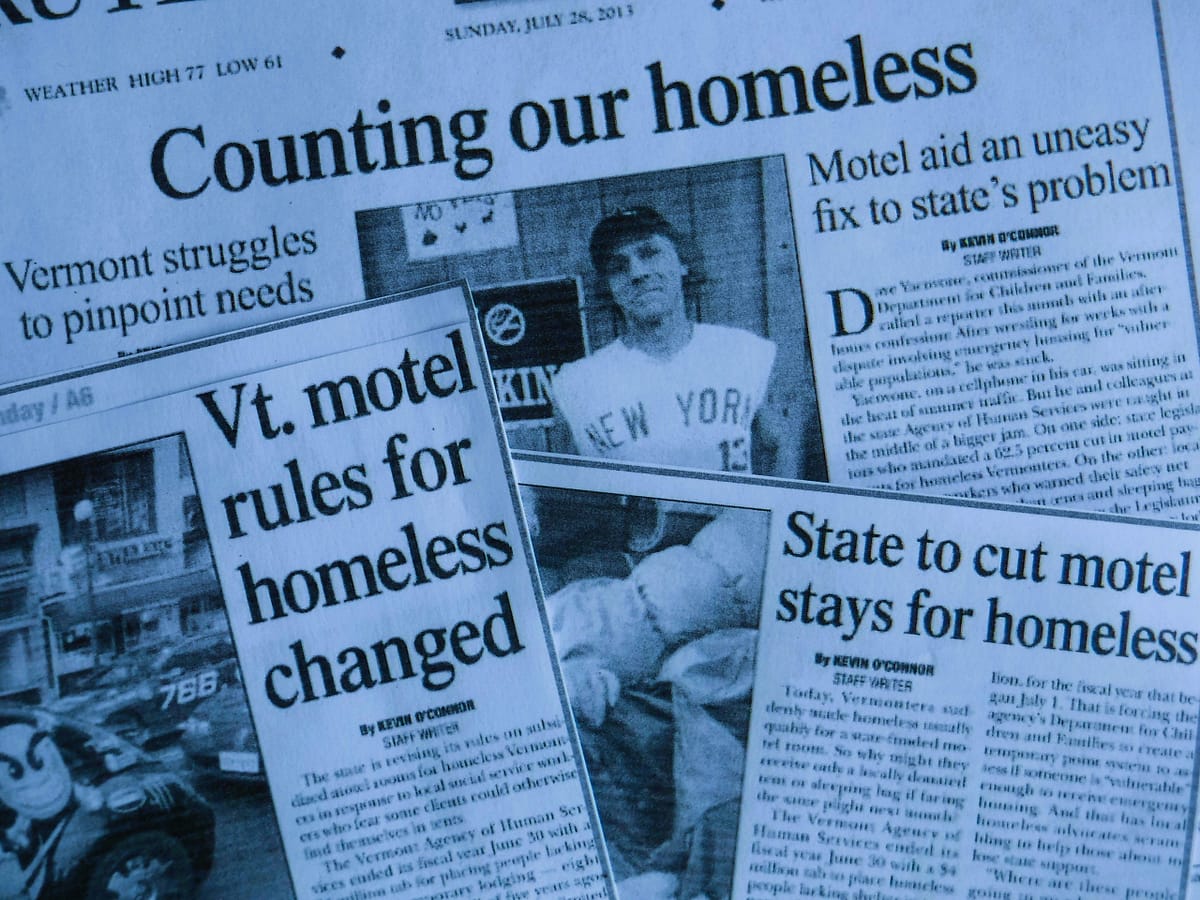
Newspaper headlines about homelessness
Why the stories that make the news rarely match the lives people actually live.
If you only learned about homelessness from the news, you’d think it was a story about crime, chaos, and tents. The headlines are loud, dramatic, and designed to grab attention, not to tell the truth.
“Homelessness Crisis Explodes Downtown.”
“Encampment Violence Surges.”
“City Cracks Down on Vagrants.”
“Drug Use Out of Control on the Streets.”
These headlines travel fast. They get shared, reposted, debated, and turned into political talking points. But they all have one thing in common:
They focus on the most extreme moments, not the everyday reality.
The truth is quieter. It doesn’t make the front page. It doesn’t go viral. It doesn’t spark outrage. And because of that, it rarely gets told.
The reality is:
- Most people experiencing homelessness are not using drugs.
- Most are not involved in crime.
- Most are trying to stay invisible, not cause problems.
- Most are working, studying, or caring for someone.
- Most are simply trying to survive another day.
But none of that fits into a headline. None of that sells ads. None of that keeps people clicking.
So the public ends up with a distorted picture, a picture shaped by the rarest, loudest, most sensational moments. And once that picture is in place, it becomes the lens through which everything else is judged.
A person sleeping in a car becomes “dangerous.”
A family in a motel becomes “a burden.”
A teen couch‑surfing becomes “a runaway.”
A senior in a tent becomes “the problem.”
Headlines create fear. Fear creates distance. Distance creates dehumanization.
And once people are dehumanized, it becomes easy to support policies that harm them because the public believes the headline version, not the human version.
The reality is simple: Most of homelessness happens off‑camera, out of sight, and outside the narrative the media profits from.
Until we challenge the headlines, we’ll never understand the truth.
Closing Reflection
Headlines are designed to provoke emotion, not provide context. But homelessness is a story that requires context, history, systems, economics, trauma, resilience, and humanity.
When we rely on headlines to understand homelessness, we end up with fear instead of facts.
Call to Action
Look beyond the headlines. Listen to lived experience. Share stories that reflect reality, not sensationalism.
The Public Perception Series · Part of the Shelter Outline movement.
Story by the Street Sentinel
📜 Disclaimer
← Back to All Series