
The Privacy Crisis:
Why Shelters Mirror Prisons
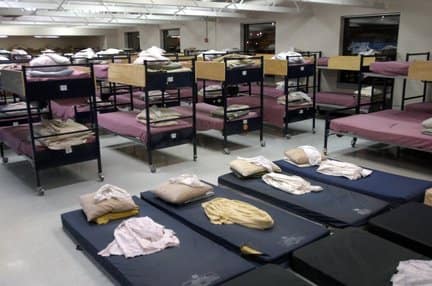
Both prisons and shelters serve a purpose: they provide a roof over one’s head and offer security from external dangers. Yet, despite their intended function, they also create environments that strip individuals of privacy, exposing them to unpredictable circumstances, including trauma-inducing scenarios that unfold out of sight.
The Loss of Autonomy and Privacy
For those who enter either system, one of the first things lost is autonomy. In prisons, strict regulations dictate daily routines, meals, movement, and interactions. In shelters, while there is technically more freedom, residents often face rigid rules, overcrowding, and limited personal space.
In both settings, people sleep in shared quarters, with little ability to control their surroundings or protect themselves from unwanted interactions.
Privacy is virtually nonexistent. Personal belongings are often vulnerable to theft, verbal or physical altercations may happen in communal spaces, and moments of solitude, crucial for mental well-being, become rare luxuries.
While both institutions attempt to maintain order, the reality is that when people are placed in confined spaces without personal control, tension rises, leading to frequent conflicts and unreported incidents.
When Trauma Happens in the Shadows
The lack of privacy isn’t just an inconvenience; it can be dangerous. Many traumatic events occur outside the view of authorities or staff, particularly in shelters where supervision is often lax due to limited funding or overcrowding.
Abuse, theft, and exploitation are common problems in both environments, exacerbated by the vulnerability of the individuals within them.
In prisons, power imbalances often lead to intimidation, assault, and emotional degradation. In shelters, those who are struggling may be taken advantage of, whether through coerced behavior, manipulation, or violence.
The fear of retaliation discourages victims from reporting incidents, creating an environment where trauma festers and cycles of harm continue.
Why Shelters Shouldn’t Resemble Prisons
Shelters are meant to be temporary spaces of refuge, but when their conditions resemble those of a correctional facility, they fail their primary mission: providing safety and hope.
– Overcrowding leads to increased tensions.
– Lack of individualized support reduces the chances of long-term recovery.
– Rigid rules sometimes prioritize control over rehabilitation.
Instead of mimicking prison-like structures, shelters need to adopt trauma-informed approaches that prioritize autonomy, dignity, and genuine reintegration efforts.
Rebuilding Spaces That Empower Instead of Control
To prevent shelters from mirroring the worst aspects of prison life, reforms are necessary:
– Smaller living arrangements that restore dignity rather than enforce uniformity.
– More trained staff to provide individual support and monitor safety.
– Rehabilitation programs focused on life skills rather than forced dependency.
In contrast to punitive environments, shelters should aim to restore rather than restrict, providing a pathway toward stability without reinforcing systemic neglect.
By the Street Sentinel