
Story 11: The Trauma of Being Ignored
The Mental Health Series · Shelter Outline Stories
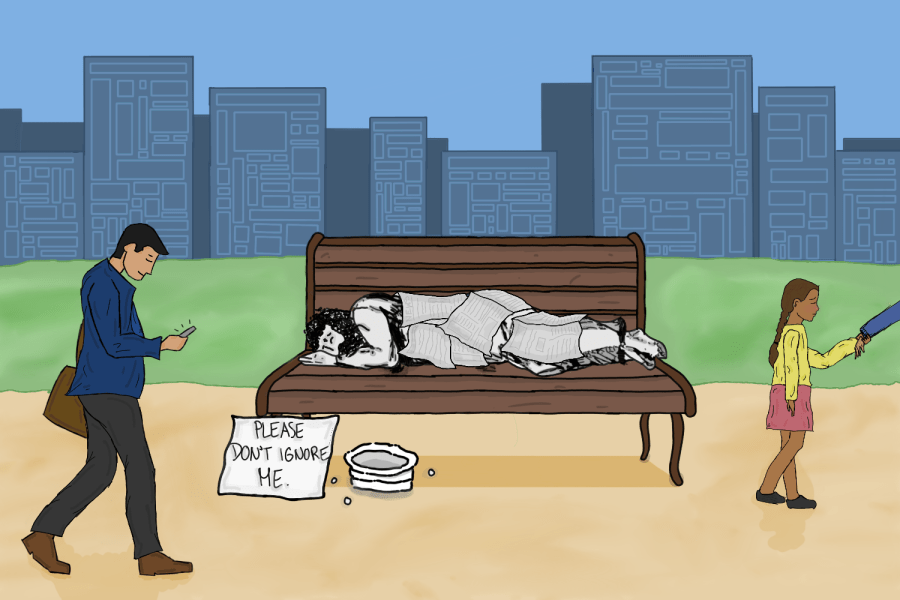
A person sitting alone while others walk past, symbolizing invisibility
Why being unseen isn’t harmless and how invisibility becomes its own form of emotional injury.
People think ignoring someone is neutral, a harmless choice, a quiet decision to “mind your own business.” But for people experiencing homelessness, being ignored is not neutral. It’s a wound. A repeated injury. A message delivered over and over again: You don’t matter here.
When someone loses housing, they don’t just lose a place to sleep. They lose visibility. They lose acknowledgment. They lose the small social cues that tell a person they still belong in the world.
Being ignored chips away at identity:
- No one makes eye contact
- people walk around them like an obstacle
- Conversations happen as if they aren’t there
- Requests for help go unanswered
- Their presence is treated like background noise
Over time, this creates a deep emotional bruise, one that doesn’t show on the outside but grows heavier on the inside. The brain interprets repeated dismissal as danger, as rejection, as proof that connection isn’t safe.
And the heartbreaking part is this: The more someone is ignored, the harder it becomes for them to reach out.
The public often misreads this withdrawal as “not wanting help.” But what they’re seeing is someone who has learned, through thousands of tiny moments, that their voice doesn’t matter. That their presence is inconvenient. That their needs are invisible.
Being ignored teaches a person to shrink. To stay quiet. To stop asking. To stop hoping.
And once someone internalizes that, it becomes a form of trauma, a slow erosion of self-worth that makes every future interaction feel risky.
The truth is simple: Invisibility is not safety. It’s harmful.
And the longer someone is treated as invisible, the harder it becomes for them to believe they deserve to be seen at all.
Closing Reflection
Being ignored is not a small thing. It shapes how a person sees themselves and how they move through the world. If we want to support people experiencing homelessness, we have to start by acknowledging their humanity with eye contact, with presence, with simple recognition that they exist and matter.
Call to Action
See people. Acknowledge them. Remember that recognition is the first step toward healing.
The Mental Health & Trauma Series · Part of the Shelter Outline movement.
Story by the Street Sentinel
📜 Disclaimer
← Back to All Series