
Things You Don’t Mention:
While You’re in the Tunnels
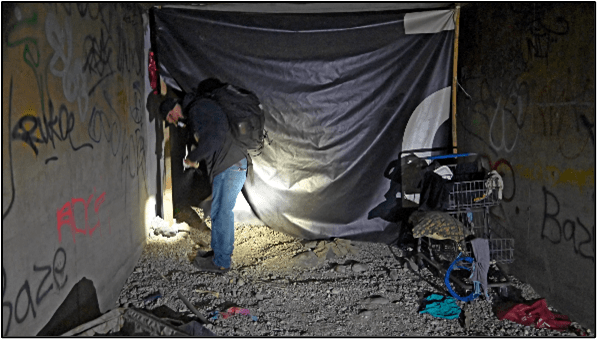
Stockton, California, is known for many things, from its rich history to its vibrant communities. However, there’s a darker side to the city that is seldom discussed: the tunnels.
There are two types of tunnels in Stockton: the underground city streets, where the homeless occasionally find refuge, and the series of connected tents near the riverfront, where the vilest activities occur.
The Underground City Streets: Beneath Stockton’s bustling streets lies a network of tunnels that dates back to the early days of the city’s development. Originally constructed for infrastructure purposes, these tunnels have become a hidden refuge for some of the city’s homeless population. It’s a precarious existence, with the constant threat of being discovered or worse, being caught in one of the many dangers that lurk in the darkness.
These tunnels provide a semblance of shelter, but they are far from safe. The homeless who find themselves here are often subject to harsh conditions, limited access to necessities, and the ever-present threat of violence.
The Tents at the Riverfront: The second type of tunnel-like environment is even more sinister. Near the riverfront, a series of connected tents has been set up, forming an underground-like network that operates under a veil of secrecy. This is where the most deplorable acts are committed.
Women who find themselves in these tents are often unsuspecting victims, lured in by the promise of shelter or safety, only to be subjected to heinous crimes. These tents are operated by bad actors within the homeless community, individuals who exploit the vulnerability of others for their gain.

The activities within these tents range from drug dealing to sexual assault. The perpetrators use the seclusion and the disarray of the tent network to their advantage, creating an environment where the most vulnerable are preyed upon.
Reports of drug abuse, physical assault, and rape are disturbingly common. For those who fall victim, it is a harrowing experience with few avenues for escape or justice.
The Fire Department’s Perspective: Even the fire department has its challenges with these areas. In 2023 alone, there were 13,909 fires related to homeless people or tents in Los Angeles, with similar trends likely affecting Stockton. These fires often stem from unsafe living conditions and the use of open flames for heating and cooking.
The tunnels and tent networks are particularly susceptible to such incidents, adding another layer of danger to an already perilous situation.
The Tunnel of Crime: These networks of tunnels and tents, ominously dubbed “the tunnels of crime,” have been a scourge on Stockton for years. Recently, law enforcement and community efforts have led to their disbandment.
However, the horrors experienced by those who suffered within them will continue to haunt the communities of Stockton for years to come. The scars left by the crimes committed in these hidden enclaves are a stark reminder of the need for sustained support and vigilance.
Addressing the Issue: Addressing the problems within Stockton’s tunnels requires a multi-faceted approach. Simply evicting the homeless from these areas does not solve the underlying issues of homelessness and exploitation.
Comprehensive solutions are needed that provide safe, affordable housing, mental health services, substance abuse treatment, and job placement assistance. Additionally, increased law enforcement presence and community outreach can help identify and protect those most at risk.
Non-profit organizations and local government must collaborate to create safe alternatives to the tunnels and tent networks. Outreach programs that build trust within the homeless community are essential. Providing resources and support can help prevent individuals from falling into the traps set by bad actors.
Conclusion: The tunnels in Stockton represent a dark and dangerous aspect of the city’s homelessness crisis. Both the underground city streets and the riverfront tent networks pose significant threats to those seeking refuge.
By acknowledging the complexity of the issue and working towards comprehensive solutions, Stockton can begin to address the root causes of homelessness and exploitation, ultimately creating a safer environment for all its residents.