
Finding Shelter:
Stories from the Streets of Stockton
Homelessness is a complex issue that manifests itself in various forms, each with its own set of challenges and coping mechanisms.
In Stockton, the homeless population can be categorized into different levels based on their living conditions and circumstances. These types help to better understand the diverse experiences of homelessness and the unique struggles faced by each group.
Type 1: This is the most visible and vulnerable group. They have only what they can carry and sleep wherever they can find space. Many suffer from severe mental health issues and turn to street drugs as a means of coping with their trauma.
Teece is one of them, living a life marked by isolation and survival. He had been through traumas that left him unrecognizable to himself.
Living on the streets with nothing but clothes on his back, he roamed the city, often finding refuge on a park bench or a patch of grass.
His eyes, once bright, had dimmed, reflecting the harshness of his reality.
When his prescribed medications ran out, he turned to street drugs, a cruel escape from his untreated mental illness.
The world had grown distant, and he kept to himself, wary of interactions with others. Teece’s life was a continuous battle against the elements and the challenges his own mind presented.
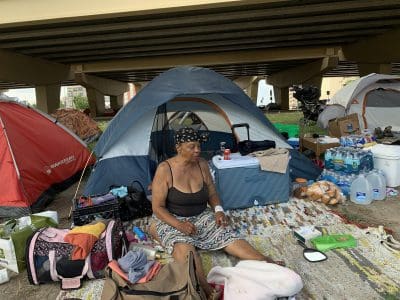
Type 2: These individuals have makeshift shelters made of tarps, cardboard, and tents. They face many of the same issues as Level 1, but their living conditions are slightly more stable. Ashley represents this group, striving to maintain a fragile sense of normalcy despite her hardships.
Her small tent, though flimsy, was a fortress against the elements. Every day was a struggle to maintain some semblance of normalcy. She often collected discarded items to improve her living conditions, creating a patchwork home that offered a fragile sense of security. Unlike Teece, Ashley still held on to hope.
She’d sometimes find odd jobs, earning just enough to scrape by. The scars of her past were still fresh, but she hadn’t given up on the idea that life could change. Ashley’s resilience shone through her daily efforts to create a better environment for herself, even in the face of overwhelming odds.
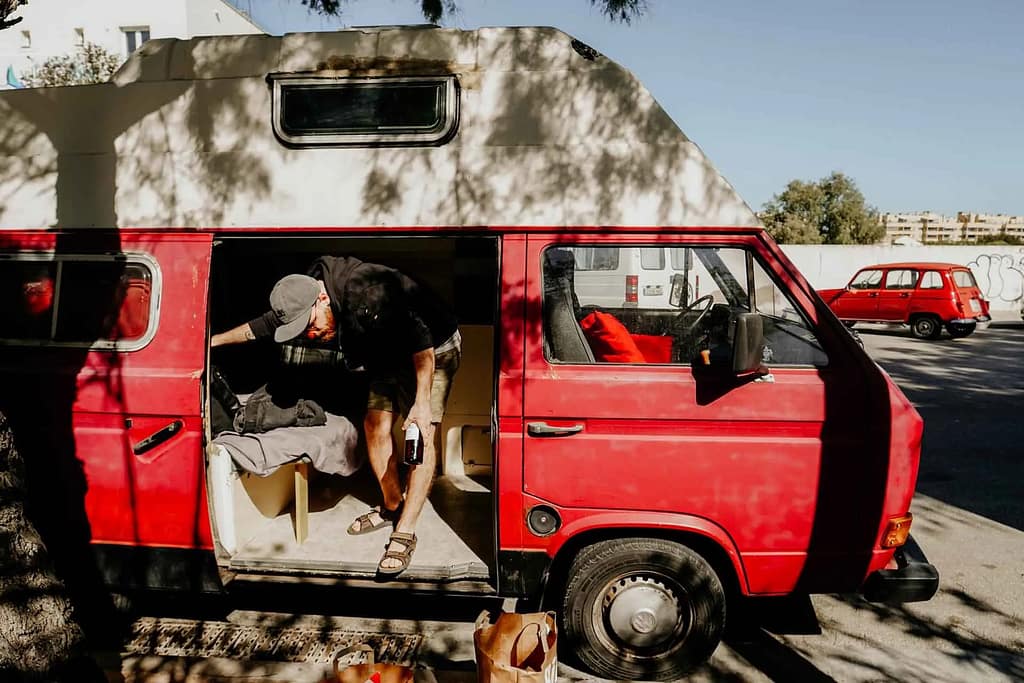
Type 3: The people in this group live in vehicles such as RVs and junk cars. Their shelters are mobile but often barely legal and uninsured, making it necessary to stay under the radar. Leon is a member of this group, using his mechanical skills to keep his RV running and help others.
He lived out of a dilapidated RV, constantly on the move to avoid being ticketed or towed.
His vehicle was more than just a shelter; it was a lifeline. Despite its constant breakdowns, it provided a semblance of stability. Leon had worked as a mechanic before losing his job.
He used his skills to keep his RV running and helped others in the same situation. It was a precarious existence, always one mechanical failure away from total collapse. Leon’s days were filled with the sounds of clanking tools and the smell of grease; his hands were perpetually covered in oil. His makeshift home was a testament to his ingenuity and determination to survive.
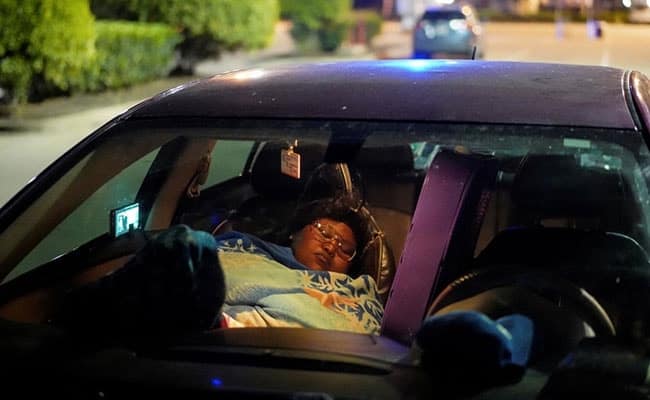
Type 4: These are the working homeless. They have jobs but cannot afford permanent housing. Shiba, who sleeps in her car and works at a diner, is an example of this group, showing remarkable resilience and determination.
Every morning, she’d leave her beaten-up car, parked discreetly in different locations, and head to work at a local diner. Her colleagues had no idea she was homeless.
Shiba showered at a nearby gym and kept her uniform pristine. She was determined to save enough money to eventually rent an apartment, a goal that felt both close and unattainable
The strain of living in such conditions was immense, but Shiba’s resilience kept her moving forward. Each day at dinner, she served customers with a smile, hiding the exhaustion that weighed heavily on her. Shiba’s spirit was unbreakable, fueled by a dream of stability and a place to call her own
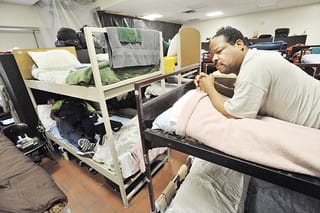
Type 5: This group includes those who are in programs and live in shelters, often with the help of nonprofits. They are on the path to reintegration into society. Jimmy’s story illustrates this level, highlighting the support and opportunities provided by community organizations. Jimmy, a level 5 homeless individual, had found a lifeline through a nonprofit organization.
He had secured a spot in a local shelter, where he received not only a bed but also access to job training programs.
The support of the community had given Jimmy a renewed sense of purpose. He worked diligently, hoping to rebuild his life and leave the shelter for good. Jimmy’s days were filled with learning new skills and connecting with others who shared similar stories of hardship and hope.
Each step he took brought him closer to rejoining society as a contributing member, his past struggles gradually becoming a chapter he could leave behind.