
Not the Norm
In a bustling city where the lines between privilege and poverty often blur, the homeless community finds itself at the center of society’s scrutiny. Among the myriads of individuals who call the streets home, African Americans are frequently cast in a harsher light, their behavior magnified and misinterpreted by a society quick to judge.
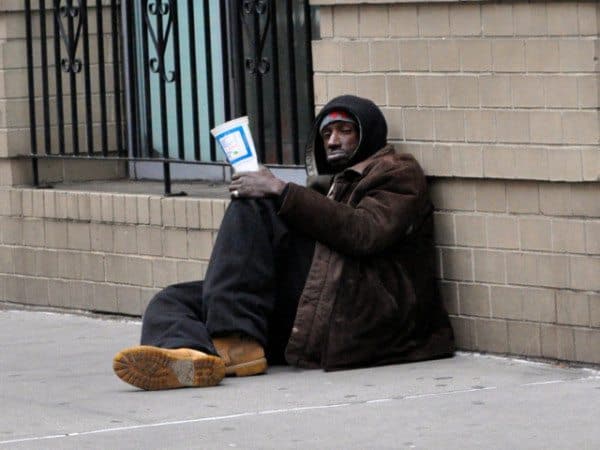
However, the reality is far more nuanced, and the actions of a few should never define the many. Marcus, a 40-year-old African American man, has been homeless for several years. His journey to the streets began with a series of unfortunate events: a factory closure that left him jobless, the sudden death of his mother, and a subsequent eviction.
Marcus’s demeanor is often perceived as hostile, but those who take the time to know him understand that his tough exterior masks a deep-seated pain and a fierce determination to survive.
On the other side of the city, Angela, a single mother of two, also finds herself in the grips of homelessness.
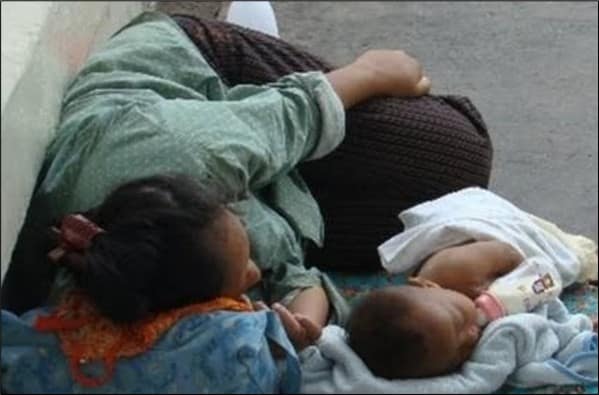
She, too, is African American, and her struggle is compounded by societal prejudices. Angela’s story is one of resilience. After escaping an abusive relationship, she took to the streets with her children, hoping for a fresh start.
Her rough-talking nature and stern approach are often misunderstood as aggression, but in reality, they are the defense mechanisms of a mother protecting her children from a harsh world.
These two individuals, Marcus and Angela, cross paths at a local shelter. The shelter, a lifeline for many, is staffed by volunteers who believe in second chances and the inherent goodness of every person.
Among them is Sarah, a young social worker with a deep sense of justice. She has witnessed the biases that plague the system and is determined to change the narrative. Sarah takes a particular interest in Marcus and Angela. She sees beyond their rough exteriors and recognizes their potential.
Marcus, despite his hardships, has a gift for storytelling. His tales of life on the streets captivate listeners, shedding light on the human experience behind the statistics.
Angela, with her no-nonsense attitude, becomes a natural leader among the shelter residents, organizing food drives and clothing donations. As Sarah delves deeper into their stories, she uncovers the systemic issues that have kept them on the margins of society. She learns that neighborhoods with low to no income often breed environments where rough talking, mean, and rude behavior are survival tactics rather than true reflections of character.
These behaviors are reactions to a world that has repeatedly failed them. Determined to make a difference, Sarah collaborates with local organizations to provide job training, mental health support, and housing assistance. Marcus, with his newfound stability, starts working as a community outreach coordinator, using his storytelling skills to advocate for the homeless.

Angela, empowered by the support she receives, secures a job at a local grocery store and continues to be a pillar of strength for her children and the community. Through their journeys, Marcus and Angela challenge the stereotypes that have long defined them.
They prove that “bad apples” exist in every race, and it’s the circumstances, not the skin color, that often dictate behavior. Their stories highlight the importance of understanding and empathy, urging society to look beyond the surface and see the individual.
In the end, “Not the Norm” is a powerful reminder that every person has a story worth telling. It calls for a shift in perspective, advocating for a world where everyone is judged not by their rough exterior but by their resilience and humanity.
It’s a testament to the fact that with the right support and understanding, even the most marginalized individuals can rise above their circumstances and redefine their narratives.
Disclaimer: This is a work of fiction. Names, characters, places, and incidents are either the product of the author’s imagination or are used fictitiously. Any resemblance to actual persons, living or dead, events, or locales is entirely coincidental. The author does not endorse or condone any actions or behavior depicted in this story. Any opinion expressed is solely those of the characters and does not reflect the views of the author or any affiliated entities.
By the Street Sentinel