
Sweeps & Displacement:
The Cycle That Never Ends
Story 4 in the series: The Difference Between Exploitation & Help
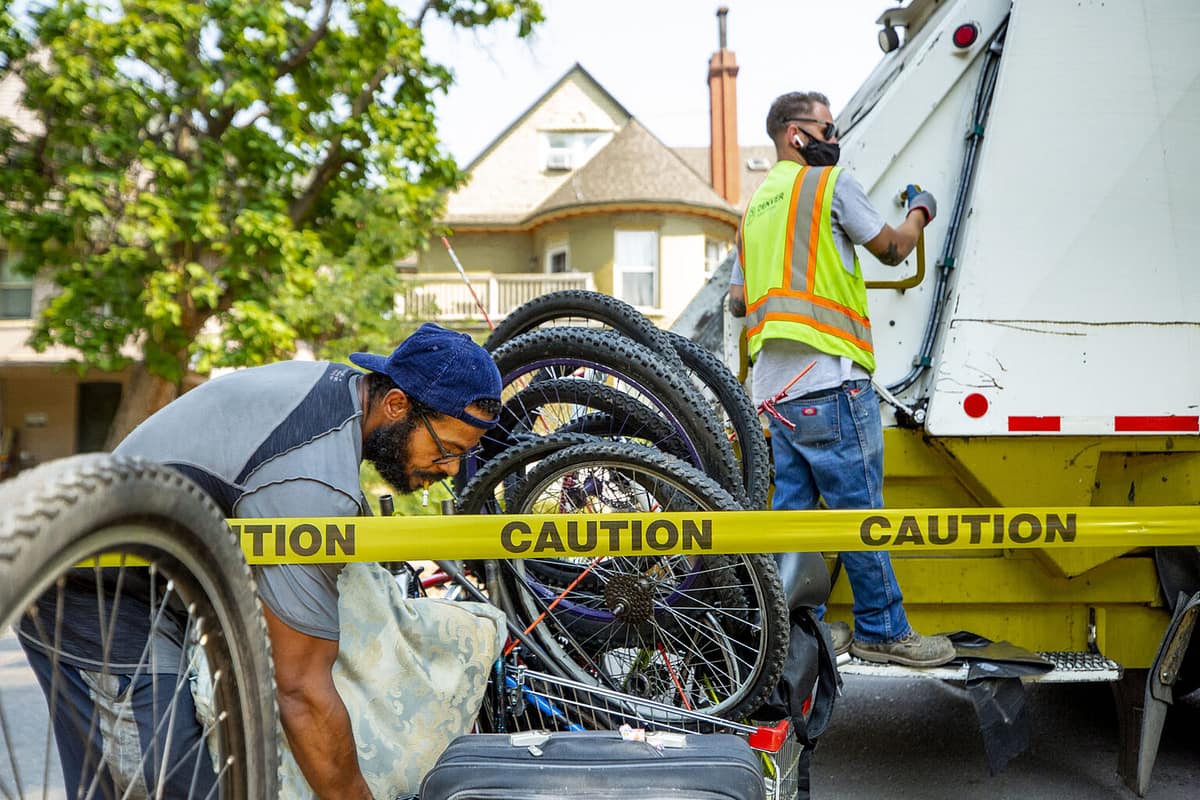
Cities across the country, including Stockton, regularly conduct “sweeps” of encampments forced clearings where people are told to move with little notice and few alternatives. These actions are often described as necessary for safety, sanitation, or public order.
But for the people living in those encampments, sweeps create chaos, trauma, and instability. They destroy progress, scatter support networks, and reset any steps toward stability. This story explains why sweeps don’t solve homelessness and why they often make it worse.
What a sweep actually does
When an encampment is swept, people are forced to:
- pack up quickly or lose their belongings
- leave behind items they cannot carry
- move to unfamiliar or unsafe areas
- separate from friends or support networks
- start over with no stability
Even when outreach teams are present, the speed and pressure of a sweep make it nearly impossible for people to make thoughtful decisions or engage with services.
The loss of essential belongings
During sweeps, people often lose:
- IDs, birth certificates, and important documents
- medications and medical supplies
- tents, blankets, and clothing
- phones and chargers
- food, water, and hygiene items
Replacing these items can take weeks or months. Some are irreplaceable. Losing them pushes people further from stability, not closer.
Why sweeps increase chaos, not safety
Sweeps are often justified as a way to improve safety. But in practice, they:
- increase stress and trigger trauma responses
- scatter people into multiple neighborhoods
- make outreach harder because people become harder to locate
- disrupt medical or mental health routines
- push people into more hidden or dangerous areas
Instead of reducing risk, sweeps often create new risks.
The cycle that never ends
Sweeps create a predictable cycle:
- An encampment forms.
- People build routines and relationships.
- Outreach teams begin making progress.
- A sweep happens.
- People scatter and lose everything.
- Progress resets to zero.
- A new encampment forms somewhere else.
This cycle can repeat for years without reducing homelessness.
Why sweeps don’t lead to housing
Sweeps are sometimes framed as a way to “connect people to services,” but the reality is:
- There are not enough shelter beds.
- Many shelters cannot accommodate couples, pets, or belongings.
- Some people have trauma histories that make congregate shelters unsafe.
- Housing programs have long waitlists.
- Case managers cannot complete paperwork during a crisis.
A sweep does not create housing. It only creates displacement.
What actually works
Cities that reduce homelessness focus on:
- stabilizing encampments instead of scattering them
- building trust through consistent, predictable presence
- coordinating outreach across agencies
- providing services on-site instead of expecting people to travel
- offering real alternatives before clearing an area
Stability creates the conditions where people can say yes to help.
The bottom line
Sweeps do not solve homelessness. They do not reduce encampments. They do not create safety. They simply move the problem from one location to another while increasing trauma and instability.
Stockton deserves approaches that build stability, not destroy it. And the people living through homelessness deserve support that respects their humanity, not cycles that reset their progress.
By the Street Sentinel