
Concrete Barriers: Segregating Cities or Solving Public Space Issues?
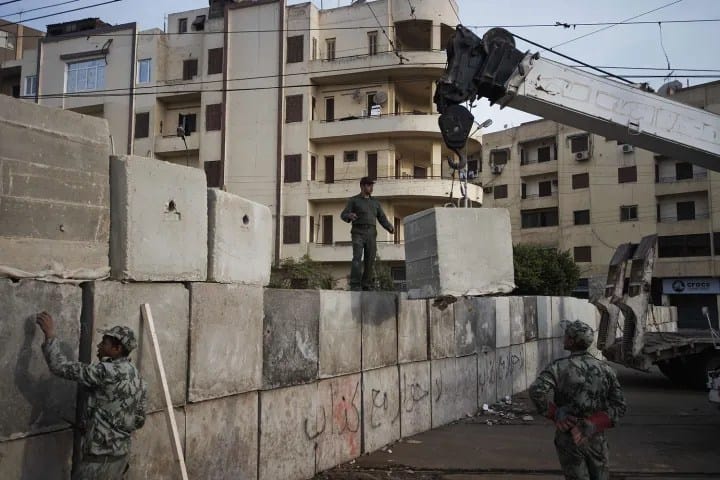
Purposes of Concrete Barriers
Cities deploy concrete barriers as a strategic urban tool, usually serving purposes such as:
✅ Preventing homeless encampments in certain areas.
✅ Deterring RV parking in high-traffic zones.
✅ Blocking unauthorized activity near storefronts and public spaces.
✅ Enforcing zoning regulations by reshaping urban design.
✅ Redirecting pedestrian or vehicle flow in areas of concern.
These barriers are framed as tools for maintaining public order, ensuring that sidewalks, parks, and commercial areas remain accessible and unblocked.
Impact: The Divided City Effect
Concrete barriers don’t just alter landscapes; they reshape social divisions.
🔹 Visible segregation: Cities begin to split into two realities, the “accepted” side and the “pushed out” side.
🔹 Restricted movement: Homeless individuals find fewer areas to exist, forcing them into less visible, less safe locations.
🔹 Increased distrust: Community relationships suffer as barriers signal exclusion instead of solutions.
🔹 Health & safety risks: Blocking encampments doesn’t solve homelessness; it disperses individuals into unfamiliar, unstable spaces.
🔹 Public support divides: Some residents feel safer, while others view barriers as evidence of inhumane policy.
While barriers reduce congestion, they also reinforce homeless displacement, deepening systemic neglect.
Criticisms: The Ethical Debate
Concrete barriers have drawn sharp criticism for:
🚫 Human rights concerns – Cities prioritize exclusion over actual solutions.
🚫 Aesthetic cover-ups – Rather than addressing homelessness, barriers hide its presence.
🚫 Long-term ineffectiveness – Encampments simply shift locations, leading to repeated enforcement cycles.
🚫 Missed opportunities – Funds spent on barriers could support sanitation hubs, shelters, or mobile services.
🚫 Community backlash – Many see barriers as symbols of division rather than progress.
Critics argue that barriers are a temporary fix, worsening social tensions instead of solving root causes.
Unclear Motivations & Alternatives
Some cities deploy barriers with murky intentions, beyond just managing encampments.
– Economic pressures: Businesses demand removal of visible homelessness due to declining customer traffic.
– Tourism preservation: Cities block encampments near attractions to maintain visitor-friendly environments.
– Political optics: Leadership focuses on removal strategies rather than funding long-term housing solutions.
– Legal avoidance: Barriers provide a loophole where cities can restrict access without direct enforcement actions. Instead of barriers, cities could implement alternatives:
✅ Sanitation stations – Providing clean restrooms and hygiene hubs.
✅ Designated safe camping areas – Managed spaces with basic infrastructure.
✅ Mobile resource hubs – Bringing services directly to unhoused populations.
✅ Permanent housing incentives – Redirecting funds into long-term assistance programs.
✅ Public space redesigns – Creating inclusive urban planning that integrates rather than excludes. The key question remains: Are barriers about safety, or simply separation?
Myth #1: Homeless People Are Just Lazy
One of the biggest lies about homelessness is that people are in this situation because they refuse to work.
Reality? Most homeless individuals either have jobs or actively seek employment.
❌ Fact Check:
– Many work minimum-wage jobs that don’t pay enough to cover rent.
– Disabled individuals, veterans, & seniors often can’t work but don’t qualify for proper assistance.
– Job loss due to economic downturns, layoffs, or medical crises puts even middle-class families on the streets. Homelessness isn’t about effort; it’s about access, affordability, and opportunity.
Myth #2: Addiction Causes Homelessness
Addiction can contribute to homelessness, but it’s not the leading cause.
The number one factor? Lack of affordable housing and low wages.
❌ Fact Check:
– Many people become addicted after becoming homeless, using substances to cope with extreme stress.
– Medical debt, domestic violence, eviction, and unemployment force far more people into homelessness than addiction does.
– Even people recovering from addiction struggle to find housing due to discrimination.
Myth #3: There Are Enough Shelters, People Just Don’t Want to Use Them
A common argument is that people choose to stay on the streets instead of going to a shelter. Reality? Most shelters are either full, unsafe, or have restrictions that prevent people from accessing them.
❌Fact Check:
– Families get separated many shelters don’t allow men and women to stay together.
– Strict curfews and eligibility rules force people to sleep outside.
– Safety concerns: Many report theft, abuse, or poor living conditions inside shelters.
– Cities don’t have nearly enough beds to meet demand.
Shelters aren’t a long-term solution, and most people aren’t refusing help; they’re just out of options.
Myth #4: They Can Just Get a Job and Find a Home
Finding work without an address, clean clothes, or reliable transportation is nearly impossible.
❌Fact Check:
– Employers require stable housing job applications, ask for addresses and phone numbers, things many homeless people don’t have.
– Bank accounts, transportation, and documentation are necessities for employment, yet homeless individuals struggle to maintain them.
– Many rental applications require steady income and good credit, making it nearly impossible to secure housing even with a job. Getting out of homelessness isn’t about effort; it’s about overcoming systemic barriers.
By The Street Sentinel