
Story 1: The Image Problem
The Public Perception Series · Shelter Outline Stories
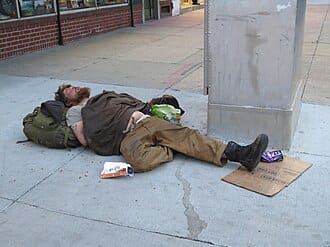
How pictures shape the story before anyone speaks.
Before anyone hears a word, before anyone asks a question, before anyone knows a name, the image has already done the talking.
A photo of a tent.
A man slumped on a sidewalk.
A woman pushing a cart.
A pile of belongings under a bridge.
These are the pictures people see over and over again, and they become the entire story in their minds. Not because they’re accurate, but because they’re repeated. The same angles. The same framing. The same message:
“This is homelessness.”
But it isn’t.
It’s the most visible version of homelessness, the one that fits neatly into a headline, a political speech, or a neighborhood complaint. It’s the version that gets clicks, sparks outrage, and reinforces fear. It’s the version that makes people feel like the problem is “out there,” far away, belonging to someone else.
What the images don’t show are the thousands of people sleeping in cars, on couches, in motels, in storage units, in waiting rooms, in shelters, in abandoned buildings, or in places they hope no one will find them.
They don’t show the families hiding their situation because they’re afraid of losing their kids.
They don’t show the workers who go to their jobs every day and still can’t afford a place to live.
They don’t show the people who are clean, sober, and doing everything right, and still stuck.
But the public doesn’t see that.
They see the image.
And once the image becomes the story, everything else becomes harder:
- Compassion shrinks
- Fear grows
- Neighborhoods panic
- Politicians posture
- Funding shifts
- Solutions get blocked
Because people aren’t reacting to homelessness, they’re reacting to the picture of homelessness they’ve been fed.
The image becomes the narrative.
The narrative becomes the belief.
The belief becomes the policy.
And that’s how a photograph becomes a barrier.
The truth is simple:
If the only images people see are the worst moments of someone’s life, they will never understand the full story.
Homelessness isn’t a single picture.
It’s a spectrum.
A system failure.
A human experience.
A story with context, history, and complexity.
But as long as the public keeps seeing the same narrow images, they’ll keep believing the same narrow ideas.
And that’s the real image problem.
Closing Reflection
If we want to change public perception, we have to change what people see, not by hiding the truth, but by showing the whole truth.
The quiet resilience.
The working poor.
The families.
The seniors.
The youth.
The people who don’t “look homeless” because homelessness doesn’t have a look.
Until the images change, the narrative won’t.
Call to Action
Share stories that show the full spectrum of homelessness.
Challenge the images that oversimplify.
Help people see what the headlines never show.
The Public Perception Series · Part of the Shelter Outline movement.
Story by the Street Sentinel
📜 Disclaimer
← Back to All Series