
Under Their Breath
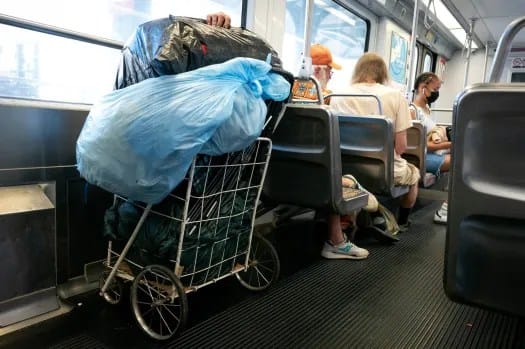
The quiet cruelty people think no one hears.
The bus was quiet when he stepped on, the kind of quiet that isn’t really silence, just people holding their breath until the “problem” passes. He didn’t say anything. Didn’t ask for anything. Didn’t even look at anyone. He just walked down the aisle, carrying the weight of a life that had already taken more from him than anyone on that bus would ever understand.
And then it started.
Not loud.
Not direct.
Just enough for him to hear.
The whispers.
The sighs.
The shifting bodies.
The quiet disgust people think doesn’t count because they didn’t say it out loud.
I sat there listening to the judgments, the assumptions, the little comments people make when they think they’re safe behind their breath. And I realized something I wish wasn’t true:
Homelessness has enough problems without the added burden of being hated for existing.
People talk like they know the story.
Like they’ve lived the life.
Like they understand the path that leads someone to lose everything.
They don’t know.
They don’t ask.
They just repeat whatever the loudest voice told them.
Rumors become truth.
Assumptions become policy.
Fear becomes a neighborhood meeting.
And suddenly, whole groups are forming to keep people like him out of sight, out of parks, out of neighborhoods, out of public spaces, out of mind.
All because of an image they’ve been fed.
All because of a story they never questioned.
And the government is watching.
Listening.
Taking notes.
Because when enough people decide a group doesn’t belong, history shows us exactly what happens next. We’ve done it before, leprosy colonies, asylums, internment sites, “vagrancy” jails. Now we call them “mega‑campuses” and “sanctioned zones,” but the blueprint hasn’t changed. Only the language has.
We pretend we’re better now.
We pretend we’re more humane.
But the truth is simpler and harder:
We don’t fear homelessness because of what it is; we fear it because of what it reveals about us.
It forces us to confront how fragile our stability really is.
How thin the line is between “doing fine” and “losing everything.”
How quickly a life can unravel in a country built on punishment instead of prevention.
Until we change the way we see people, we’ll keep building walls and calling it compassion.
We’ll keep pushing people out of sight and calling it progress.
We’ll keep mistaking discomfort for danger.
Homelessness isn’t the threat.
Our attitudes are.
And the saddest part?
The man on the bus didn’t say a word.
He didn’t have to.
The whole world had already spoken for him under its breath.
Closing Reflection
If we want real change, it starts with the smallest, quietest moments, the ones where no one thinks their reaction matters. Because the hidden toll of homelessness isn’t just the struggle to survive. It’s the constant reminder that people don’t want you around.
And that’s something we can change.
But only if we’re willing to hear ourselves.
Call to Action
Share this story.
Talk about it.
Challenge the whispers.
Because silence is how cruelty survives.
📜Disclaimer
← Back to All Series
Image & Digital Materials Use Notice
By the Street Sentinel