
What Stockton Has Now:
Mapping the Homeless-Services Landscape
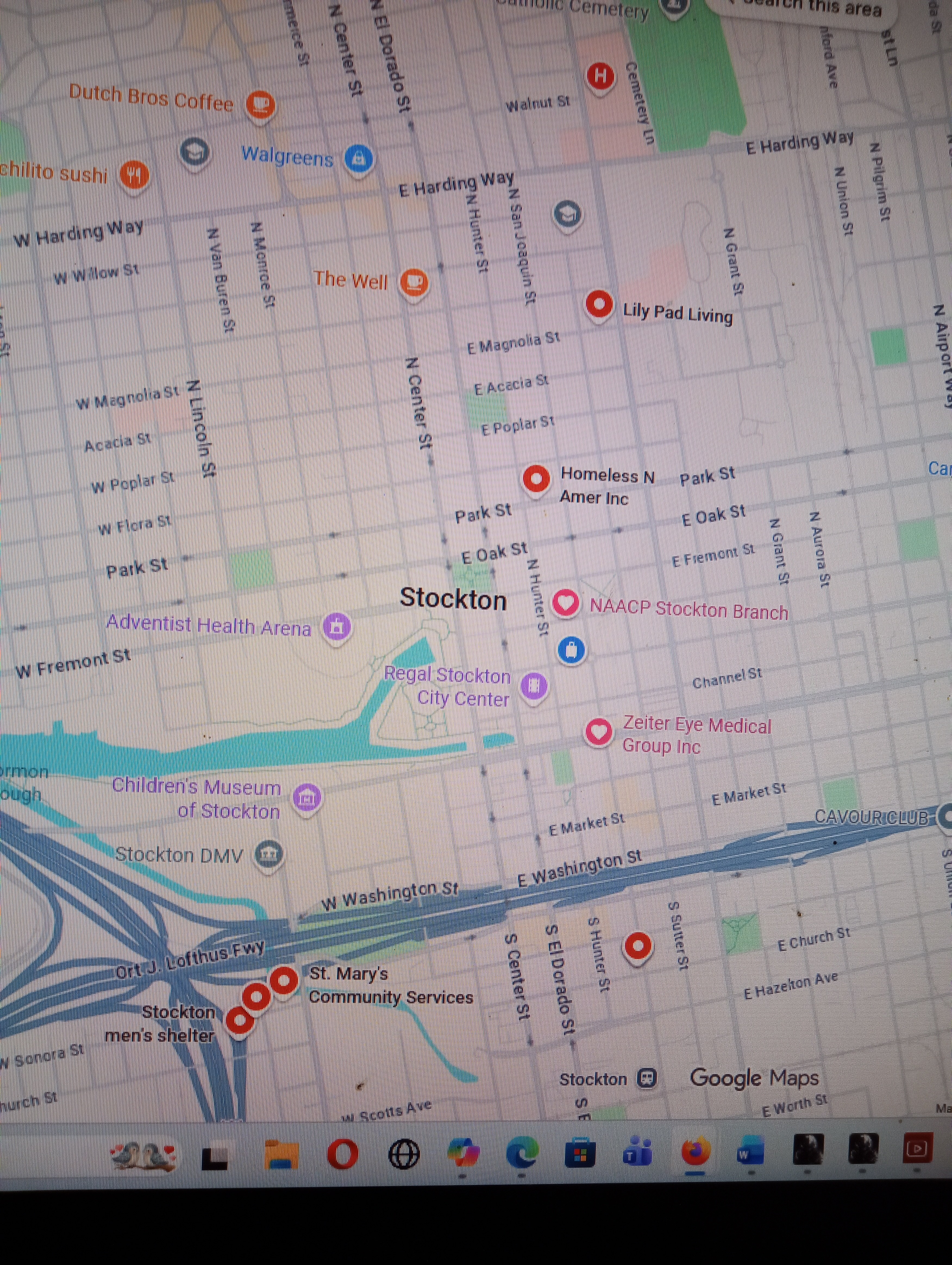
Before we talk about what Stockton is building next, we need to be honest about what Stockton already has.
This city is not empty. It is full of people and organizations trying to help: churches, nonprofits, outreach teams, shelters, clinics, volunteers, cleanup crews, and city departments. Each one is doing something important. Each one is carrying a piece of the load.
But the pieces are not connected. There is no shared architecture. No stabilizing layer. No continuity engine.
This is a respectful, factual look at the helpers already on the ground and the gaps that remain.
The Major Types of Helpers in Stockton
While the names and logos differ, most helpers fall into a few main categories:
- Feeding and basic-needs providers
- Outreach and harm reduction teams
- Shelters and housing programs
- Health and behavioral health providers
- Cleanup and beautification crews
- Enforcement and enforcement-adjacent actors
- Faith-based and volunteer circuits
Each category fills a niche. None of them provides citywide stability and continuity.
Examples of Helpers
(Not an Exhaustive List)
Stockton’s landscape includes organizations such as:
- Feeding and basic-needs providers like local churches, St. Mary ’ s-style dining programs, and pop-up meal ministries.
- Outreach and harm reduction teams that bring water, Narcan, hygiene kits, and quick support to visible encampments.
- Shelters and housing programs such as mission-style shelters, transitional housing, and limited rapid rehousing slots.
- Health and behavioral health providers, including clinics and county behavioral health teams.
- Cleanup and beautification crews that remove trash and debris from public spaces.
- Enforcement-adjacent teams that respond to complaints, conduct abatements, and participate in sweeps.
- Faith-based and volunteer circuits that show up with clothing, food, prayer, and seasonal support.
All of these efforts matter. None of them is designed to stabilize encampments or manage emotional and sensory fields over time.
What These Groups Do Well
- Feeding groups make sure people don’t go hungry.
- Outreach teams keep people alive with Narcan, water, and basic supplies.
- Shelters provide beds, case management, and a temporary roof.
- Health providers treat wounds, illnesses, and mental health crises.
- Cleanup crews respond to public complaints and remove debris.
- Faith and volunteer groups bring human connection, prayer, and care.
These are real contributions. They deserve recognition.
Who Gets Left Out
Even with all this activity, certain people are consistently left out:
- People with trauma around institutions and shelters
- People with pets or partners who can’t be separated
- People with mobility issues who can’t travel to services
- People who avoid crowds due to anxiety or past harm
- People who can’t meet strict shelter rules or curfews
- People living in deep encampments, far from main corridors
- People who need stability and continuity, not one-time contact
These are the people who are most likely to be swept, displaced, cited, or arrested and least likely to be stabilized.
The Pattern: Ingredients Without a Recipe
When you zoom out, a pattern emerges:
- Stockton has food, but not stability.
- Stockton has outreach, but not continuity.
- Stockton has shelters, but not universal accessibility.
- Stockton has clinics, but not emotional field management.
- Stockton has cleanup, but not encampment stewardship.
- Stockton has enforcement, but not long-term solutions.
Stockton has ingredients. What it doesn’t have is a recipe, a coordinated system that turns all these efforts into a stable, predictable, dignity-first response.
Why This Matters for the Future
To build a city that can finally handle homelessness in a lasting way, Stockton needs more than more of the same. It needs a new layer, a stabilizing, coordinating, predictive layer that connects all the helpers into a single, coherent system.
That is where Shelter Outline comes in: not to replace what Stockton has, but to organize it, stabilize it, and give it a shared backbone.