
🧭 A Plan to Do Something
New with the Fight on Homelessness
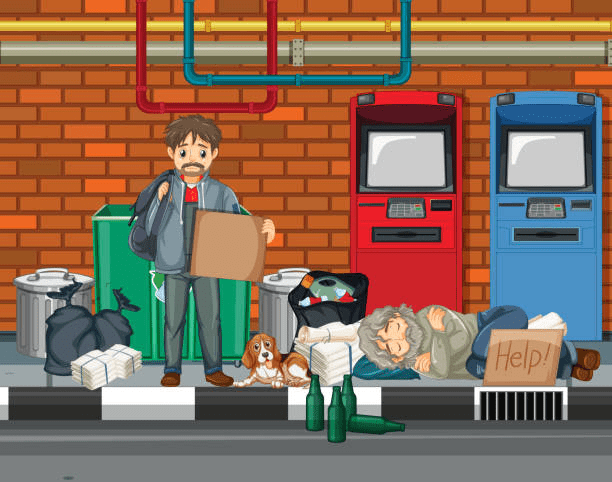
Introduction: The Fight Isn’t Working Not Because
People Don’t Care, But Because the System Isn’t Built to Win
For decades, cities have been fighting homelessness with the same tools, the same assumptions, and the same slow‑moving systems. Billions of dollars move through programs that take years to build, months to approve, and often fail to reach the people who need help today.
Meanwhile, people living outside are forced to survive in unsafe, unstable conditions that make progress nearly impossible.
This isn’t a failure of compassion.
It’s a failure of design.
The fight on homelessness has become a loop:
- build something expensive,
- wait for it to open,
- watch the need outpace the supply,
- repeat.
We need a plan that does something new not bigger, not louder, but different.
1. The Core Problem:
The System Moves Slower Than Human Need
People fall into crisis in hours, but the system responds in years.
Housing is essential, but housing alone cannot be the only tool.
Cities need a middle layer something fast, humane, and scalable that stabilizes people while the long‑term solutions catch up.
Right now, that middle layer barely exists.
2. The New Plan:
Build Stability First, Not Last
The new plan starts with a simple truth: People can’t rebuild their lives while living in chaos.
So instead of waiting for housing to be built, we create stability now through:
- Self‑contained, low‑barrier tent encampments
- Safe, organized micro‑communities
- Predictable environments with clear standards
- On‑site support that meets people where they are
- Modular layouts that can be deployed in weeks, not years
This is not a replacement for housing.
It’s the missing layer that makes housing possible.
3. The Philosophy: Dignity Is
Not a Reward It’s the Starting Point
Traditional systems often treat dignity as something people “earn” once they comply with rules or complete programs.
This plan flips that.
Dignity is the baseline condition.
Structure is the support, not the punishment.
Stability is the first step, not the last.
When people feel safe, respected, and grounded, everything else becomes possible.
4. The Model: A Managed, Predictable,
Community Centered Environment
The plan introduces a model that is:
Low‑Barrier
Any California resident can enter, no sobriety tests, or bureaucratic hoops.
Structured
Clear community standards protect residents and staff.
Supportive
Navigation, casework, and peer support are available on‑site.
Scalable
The same blueprint works for 30, 50, or 100 people.
Replicable
Cities can deploy it on vacant lots, parking areas, or transitional parcels.
This is a bridge, not a dead-end a place where people can stabilize, rest, and plan their next steps.
5. The Outcome: A System
That Finally Matches the Speed of the Crisis
When cities adopt this model, three things happen:
1. People get safer immediately
No more sleeping in alleys, under freeways, or in unsafe encampments.
2. The city gets a predictable, manageable alternative to sweeps
Order without cruelty.
Safety without displacement.
3. The long‑term housing system finally gets breathing room
Stability reduces crisis churn, making housing placements more successful.
This is how you build a homelessness response that actually works:
fast enough to matter, stable enough to last, and humane enough to be worth building.
6. The Invitation:
Let’s Build the Missing Layer Together
This plan isn’t about replacing existing efforts.
It’s about completing them.
It’s about giving cities a tool they’ve never had:
a scalable, dignity‑centered, stability‑first community model that can be deployed now not in five years.
It’s time to do something new with the fight on homelessness.
Not because the old efforts were wrong, but because the crisis has outgrown them.
Shelter Outline: The Network exists to build that new layer.
And this plan is how we start.
📜Disclaimer
← Back to All Series
Image & Digital Materials Use Notice
By the Street Sentinel